

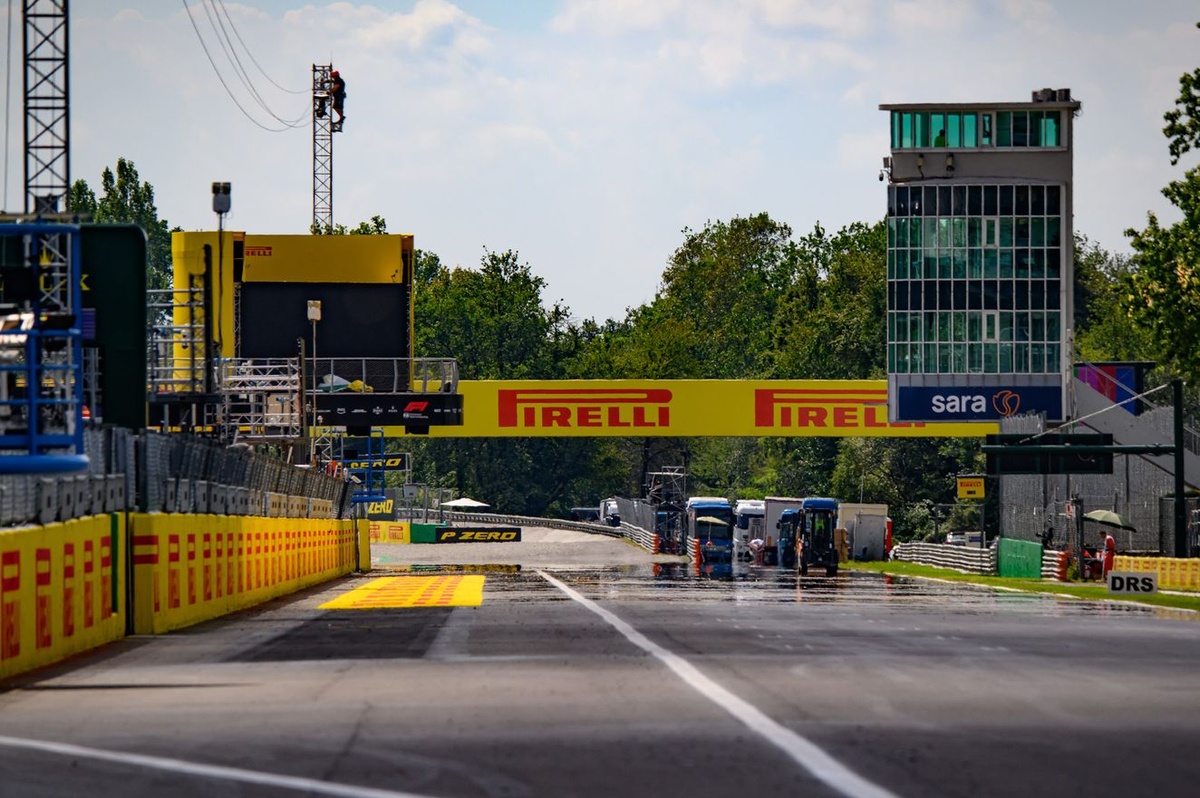
Monza may be known as the ‘Temple of Speed’ in Formula 1, but is set to look different at the 2026 Italian Grand Prix.
It was always clear that Monza was going to be one of the most challenging weekends of the season in terms of energy management with the new power units, with long straights and few braking zones to recover energy.
Up to now, the lowest harvesting limit had been set for Austria, with 6MJ per lap, but in Monza it will be 5MJ. This makes sense, as braking alone wouldn’t have sufficed to recover so much energy, so there would have been much super clipping on straights – when the MGU-K harvests energy at full throttle, so the car loses speed. The FIA wanted to avoid that scenario; there will also be less lift-and-coast.
On the other hand, having little energy means cars will drain the battery early on straights before gradually cutting off the electric motor’s assistance, leaving only the internal combustion engine active for the remainder of the straight – so speeds will either stabilize or begin to drop.
McLaren team principal Andrea Stella and Oscar Piastri have explained that, on the simulator, top speeds were lower in Monza than in Hungary, where energy management wasn’t a limitation. In Budapest, the hybrid could be used for longer, with speeds upwards of 350km/h.

Limiting energy will lead to less super clipping than at Silverstone, Suzuka and Melbourne, though it won’t completely disappear – but Kimi Antonelli reckons “it’s going to be much better than we all anticipated”. Some other drivers fear they might still have to downshift late on straights to keep revs high.

Isack Hadjar, Red Bull Racing
Photo by: Marc Fleury
This will open up the slipstreaming game which, even with active aero, could prove highly effective – was shown by Max Verstappen and Isack Hadjar at Spa-Francorchamps. “The passing and repassing games probably will be a record of all times here, or like MotoGP,” Aston Martin chief trackside officer Mike Krack predicted.
Considering that the amount of recoverable energy will be lower than usual, even with in the race, Overtake Mode will provide a significant power boost and make overtaking easier than DRS used to – hence Mercedes taking an engine penalty with Antonelli here.
The risk, however, is finding yourself low on energy after using Overtake Mode, so that ‘yo-yo’ dynamic could be seen again.
One factor can’t be overlooked: some teams have already reached the downforce levels they expected for the end of the season, so braking distances are shortened, drag on straights in increased, and harvesting in corners is reduced. This increases the need for super clipping and lift-and-coast. That’s why reducing recoverable energy was so crucial in Monza.
We want your opinion!
What would you like to see on Motorsport.com?
- The Motorsport.com Team
Originally published by motorsport.com —
Read Original Article